Sheet thickness does not describe zinc-coating mass. A colour code does not define the paint system or weathering performance. Stainless steel is not immune to every environment. Compare substrate, grade, coating, finish and actual exposure together, with the applicable acceptance requirements.
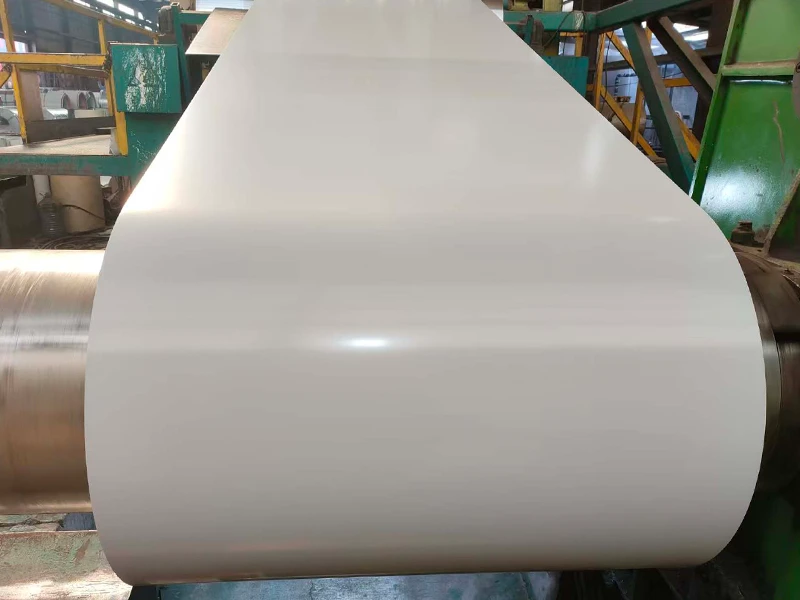
PE, SMP, HDP and PVDF
PE is polyester; SMP is silicone-modified polyester; HDP is high-durability polyester; PVDF is a fluoropolymer paint system. Specify the system for the exposure, appearance and fabrication requirements, together with the topcoat and back-coat film thicknesses.
Passive surface and standards
Stainless steel relies on a chromium-rich passive surface rather than an applied zinc coating. Grade and exposure therefore matter. For rolling scope, JIS G4304 covers hot-rolled stainless products and JIS G4305 cold-rolled products; the order must identify the applicable standard and condition.
Alloy families
1050, 1060 and 1100 belong to the commercially pure aluminium series; 3003 is aluminium-manganese; 5052 aluminium-magnesium; 6061 a heat-treatable aluminium-magnesium-silicon alloy. Their balance of forming, conduction and strength differs. Aluminium also develops a natural oxide surface, but this does not remove the need to assess the environment.
Technical criteria for comparing sheet materials
Thickness and coating mass
Sheet thickness is a dimensional measure; coating mass per unit area describes the metallic coating. Each measure and its acceptance requirements should remain distinct in comparison records.
Prepainted specifications and service conditions
Prepainted sheets with the same colour code still require comparison of substrate, paint system and front and back paint-film requirements. Service environment and weathering requirements also form part of the assessment.
Grade, alloy and service medium
Comparisons of stainless steel and aluminium take account of grade or alloy, the actual service medium and surface condition. These provide the basis for project acceptance requirements.