Galvanized sheet is used across building components, appliance panels, transport fittings and metal furniture. Examples include studs, purlins, refrigerator backs, washing-machine housings, truck compartments, toolboxes, shelves and storage cabinets. Each component needs its own grade, thickness, zinc coating and fabrication specification. Visible surfaces and cut edges should be considered with the assembly and service conditions.
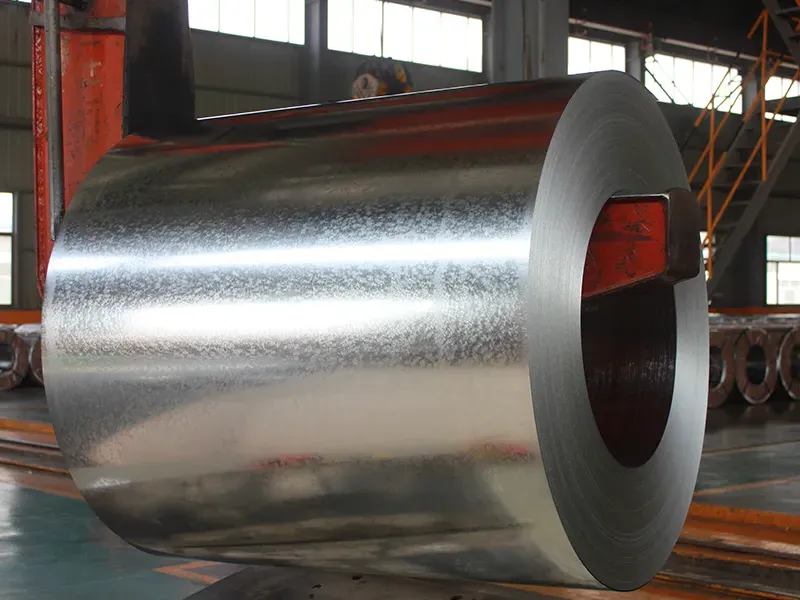
Spangle and coating mass
Regular, fine and zero-spangle surfaces describe the visible zinc crystallisation. They are distinct from the coating-mass requirement. Specify both when appearance and corrosion protection matter.
Forming and fabrication
Bending, stamping, profiling and welding impose different requirements on the substrate and surface. Include the intended operation, thickness tolerance and required finish when specifying material for purlins, decking or appliance housings.
Z and ZF
Z denotes a zinc coating, while ZF denotes a zinc-iron alloy coating. These coating designations describe a different requirement from spangle appearance and must be read together with the specified material standard.
Galvanized sheet: component fabrication and protection
Applications and material specifications
Uses such as studs, appliance housings, vehicle compartments and storage cabinets require component-specific definitions of grade, thickness and zinc-coating requirements.
Forming and welding conditions
Bending, stamping, roll forming and welding have distinct processing requirements. Substrate, thickness tolerance and finished-surface requirements must be assessed against the operations needed for each component.
Exposed faces and cut edges
Component drawings should identify exposed surfaces and cut edges. Protection requirements depend on the joints, assembly method and actual service environment.