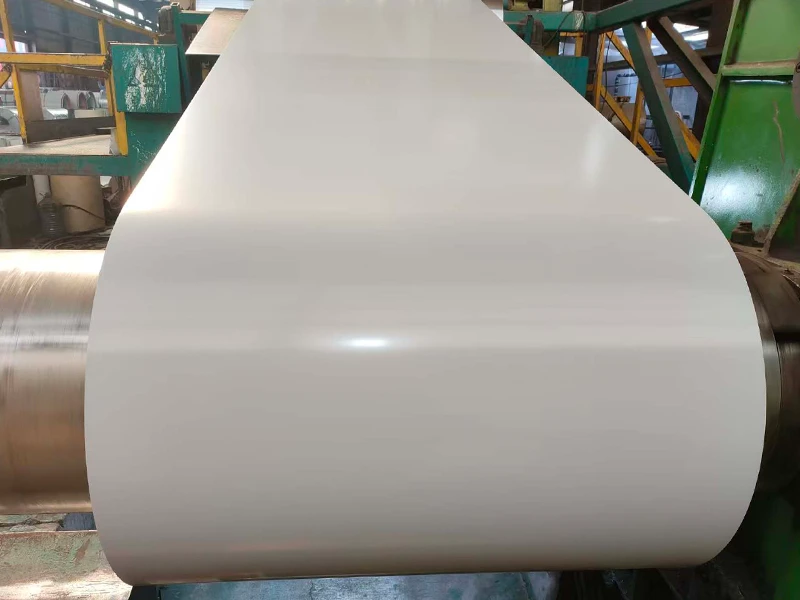
A colour-coated surface can be plain, embossed or printed. Colour identifies the visual reference; embossing adds surface texture; printing adds a decorative pattern. These appearance choices must be specified alongside the substrate, paint system, film thickness and gloss. Coated sheet may subsequently be profiled or used as a panel facing, but a facing material does not define the performance of an entire building-panel system.
Substrate, pretreatment and paint
Prepainted steel combines a galvanized or aluminium-zinc-coated substrate with pretreatment, paint application and curing. PPGI identifies the galvanized substrate; PPGL identifies the aluminium-zinc-coated substrate.
Colour, texture and reverse side
A colour code alone does not define the finish. RAL or sample matching, gloss, smooth or embossed texture, woodgrain, stonegrain or brushed effects and reverse-side coating are separate specification items.
PPAL coating directions
PE is associated with interior finishes, ceilings and aluminium-composite panels; PVDF with exterior façades and metal roofing; FEVE with façades, door/window systems and shutters. Surface pretreatment, alloy temper and the intended forming operation remain part of the complete specification.
Prepainted finishes and sample specifications
Plain colour, embossing and printing
Plain-colour coatings, embossed textures and printed patterns are distinct surface types. Project appearance requirements should define the selected type, agreed colour code or physical sample, gloss and texture; a colour name alone does not fully describe the finished appearance.
Samples and material specifications
Sample approval records should identify the substrate, paint system, film thickness and reverse-side requirements in relation to the intended profiling or panel-facing use.