Cold rolling describes a rolling route; galvanizing describes a surface-protection process. A cold-rolled substrate can subsequently be galvanized, so these are not necessarily opposing product categories. The cold-rolled route involves preparation, rolling, heat treatment, levelling and finishing; a coating specification is an additional decision.
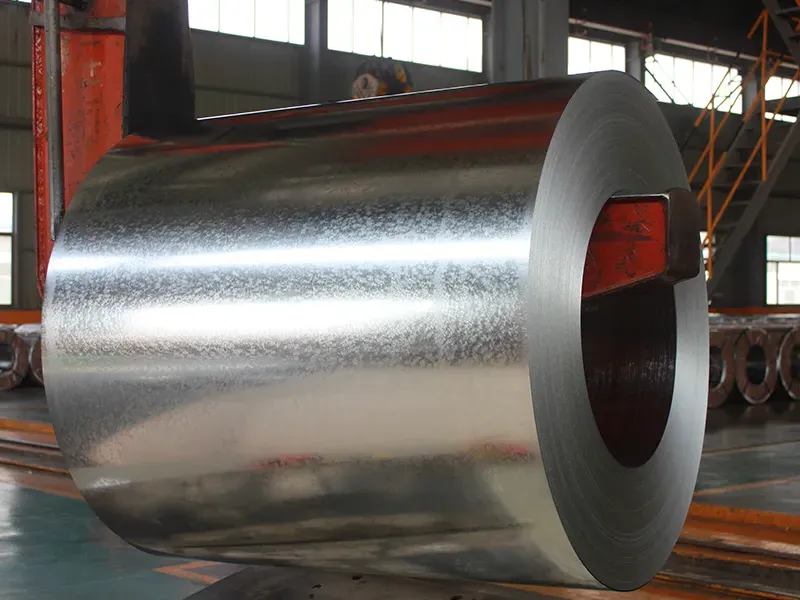
Continuous hot-dip coating
A cold-rolled steel substrate passes through a molten-zinc coating process. The zinc layer provides a barrier and sacrificial protection; the steel grade still determines the mechanical specification.
Spangle and coating mass
Regular, fine and zero-spangle surfaces describe the visible zinc crystallisation. They are distinct from the coating-mass requirement. Specify both when appearance and corrosion protection matter.
Z and ZF
Z denotes a zinc coating, while ZF denotes a zinc-iron alloy coating. These coating designations describe a different requirement from spangle appearance and must be read together with the specified material standard.
Cold rolling and galvanizing: distinct processes
Cold-rolled substrate processing
Cold rolling describes how sheet is rolled. Substrate processing includes preparation, rolling, heat treatment, levelling and finishing, with the material condition matched to subsequent fabrication requirements.
Zinc coating and surface protection
Galvanizing describes the addition of zinc to the sheet surface. Whether a cold-rolled substrate requires galvanizing, and which coating is specified, are separate surface-protection requirements to be recorded alongside the substrate processing specification.